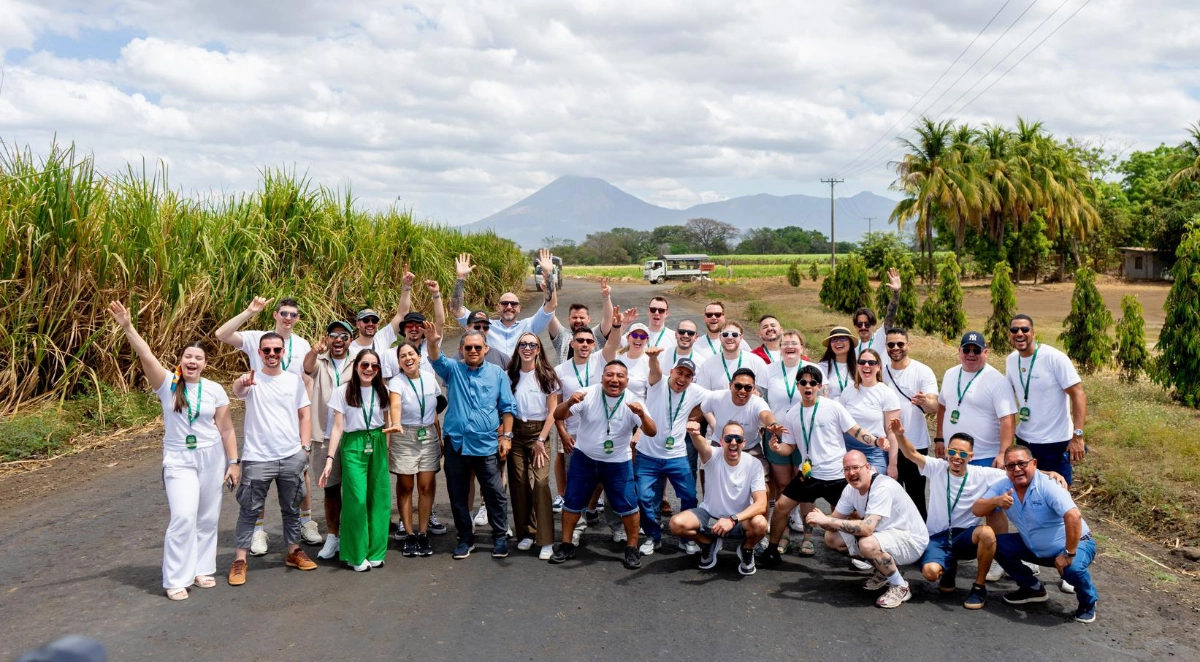
Our second day in Nicaragua was a deep dive into the heart and soul of Flor de Caña, a brand with a compelling purpose. Our journey took us to Chichigalpa, Nicaragua, a site rich in history and innovation. Here, we explored the intricate processes and sustainable practices that define Flor de Caña.
A Sustainable Vision
Our first stop was the sugar cane production area, where rows of vibrant green stalks swayed in the Nicaraguan breeze. It’s impressive to witness firsthand how 12% of Nicaragua’s energy is renewable, much of it coming from Flor de Caña’s sustainable sugar cane production. They proudly recycle 97% of the water used during production, underscoring their commitment to sustainability.

Flor de Caña’s attention to detail is evident in their five-time distillation process, ensuring their raw ethanol rum is free of methanol traces. This dedication to quality has earned them a reputation so strong that they supply base alcohol to five Caribbean rum producers.

Crafting Excellence
We learned about Flor de Caña’s unique fermentation process. Since 1943, they’ve been fermenting with cultivated yeast produced in-house, using three different yeast cultures to craft their rum’s distinctive flavor profile. With their five distillation columns, they can produce an astounding 150,000 liters of alcohol per day, using innovative steam recycling to power their operations.
The alcohol emerges from the stills at 96% before moving to the aging process. Flor de Caña boasts the largest reserve of aged alcohol, a testament to their legacy of excellence.
A Legacy of Community Support
Flor de Caña’s impact extends beyond rum production. They’ve built a top-tier hospital providing free healthcare to their employees’ families. Additionally, the Pellas family founded a school in 1913 to educate their workers’ children and foster community growth. This school, now in its fifth generation, offers education from preschool to high school, specializing in technology and bilingual education. Scholarships further support students pursuing higher education.
Planting Roots and Touring the Distillery
After touring the school, we planted trees, contributing to Flor de Caña’s reforestation efforts. A fellow participant, Lacey, even found the tree she planted two years ago, which inspired me to choose a strategic spot for my tree, hoping to find it on a future visit.

Next, we embarked on a distillery tour with our knowledgeable guide, Brianna. We visited the iconic train, cinema, and savored a tasting of 25-year-old rum paired with 70% cocoa chocolate, a combination that transformed the rum’s flavor into a delightful molasses-like experience.

At the cooperage, we observed the dismantling and reassembly of barrels, enhanced with banana tree fibers to minimize the angel’s share. We tasted barrel strength rum from 1987 in the aging house and explored the museum, enriching our understanding of Flor de Caña’s history.

Our day concluded with a wonderful luncheon before the three-hour drive back to Managua. Once refreshed, we visited the tasting room for a hands-on experience blending our own bottles of rum. I crafted a blend of 75% 19-year-old and 25% 17-year-old rum, while others experimented with all the available years (11, 17, and 19). I’m eager to savor my creation at home!
Blending Experiences and Culinary Delights

We wrapped up the evening with a delectable three-course dinner at Miralagos. The food was exquisite, crafted with precision, and the service was impeccable. After a day filled with education, exploration, and, of course, rum, we retired with full bellies and cherished memories of our Nicaraguan adventure.